Investigator report — 2026/06/17
Verdict
A strong edition in terms of writing craft and story selection — the LAB article on SpaceX/Cursor and Meta's engineering implosion is the best piece this paper has run in at least a week, and the Watergate archive entry earns its place both on the date and as a thematic foil to the QUESTION. The main editorial failure is a structural one: THE LONG READ and THE LAB both cover the Meta engineering story at full depth from the same single source, making the reader feel like they're being handed the same article twice. The ON THE TRAIL subsection shipped in a format that diverges meaningfully from the spec — missing per-day mileage splits, 1-night/2-night labels, and compact pipe-delimited weather quotes. The pipeline ran cleanly except for the fact-checker's inability to open the WTA trip-reports source under a slightly wrong filename, which left ON THE TRAIL claims unverified. Total cost: $7.75.
Frontpage
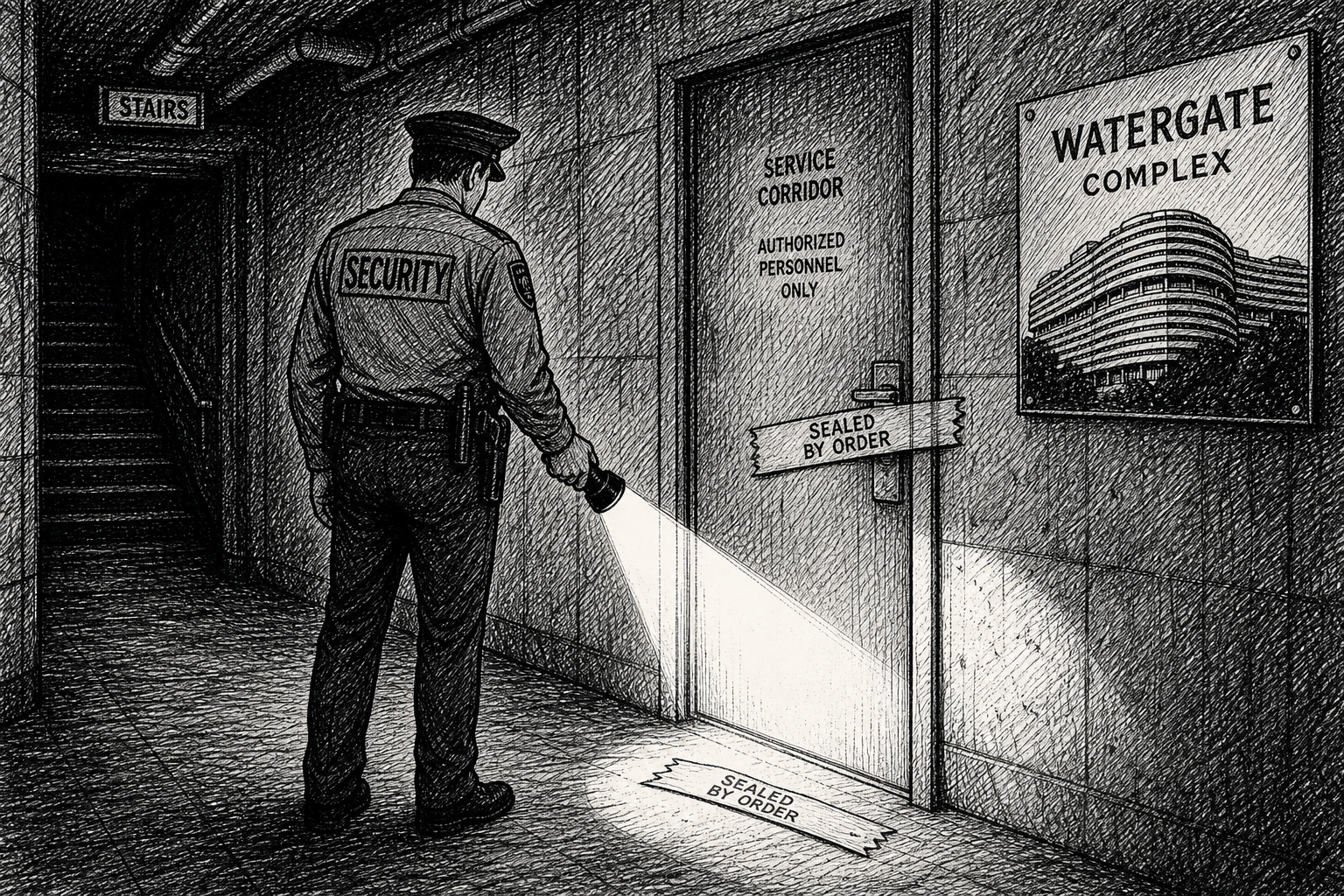
The deployed PNG renders well as a newspaper front page. Visual hierarchy is clear: THE LAB dominates the top-left with a 44px headline and three full paragraphs; THE PELOTON sits right in a narrower column with a 30px headline. Row 2 places THE QUESTION (40px, left) alongside THE LONG READ (26px, right) — the size differential is appropriate given priority 79 vs 74. Row 3 gives FROM THE ARCHIVE the image slot and a 40px headline, with THE WORLD headline-only and ALSO NOTED in bullets below-right. No clipping issues, no overrun headlines, no duplicate paragraphs detected. The art director correctly used the archive image (Watergate corridor, pen-and-ink) as the only lead image on the page and placed the section accordingly.
One layout note: THE LONG READ headline on the frontpage ("The Engineers in the Gulag") is rendered at 26px — visually smaller than THE QUESTION at 40px — even though both are in row 2. This is by design (col-longread uses font-size: 26px vs col-question's 40px), but for a reader scanning quickly, the LONG READ section feels subordinate to THE QUESTION when in practice they are nearly equal priority. This is a layout choice worth revisiting.
Priority ranking
| Section | Priority | Length (words) | Image | Notes |
|---|
| THE LAB | 92 | ~1,274 | — | Three stories; priority justified |
| THE PELOTON | 84 | ~702 | — | Van Aert tour-out plus multi-race coverage |
| THE QUESTION | 79 | ~415 | — | Cross-domain bridge; priority earned |
| THE LONG READ | 74 | ~991 | — | Same source as LAB's Meta section |
| THE WORLD | 65 | ~875 (incl. ON THE TRAIL) | — | Thin world beat, full local |
| FROM THE ARCHIVE | 42 | ~462 | yes | Priority capped at 45; well-chosen date |
| ALSO NOTED | 9 | 14 bullets | — | Healthy volume |
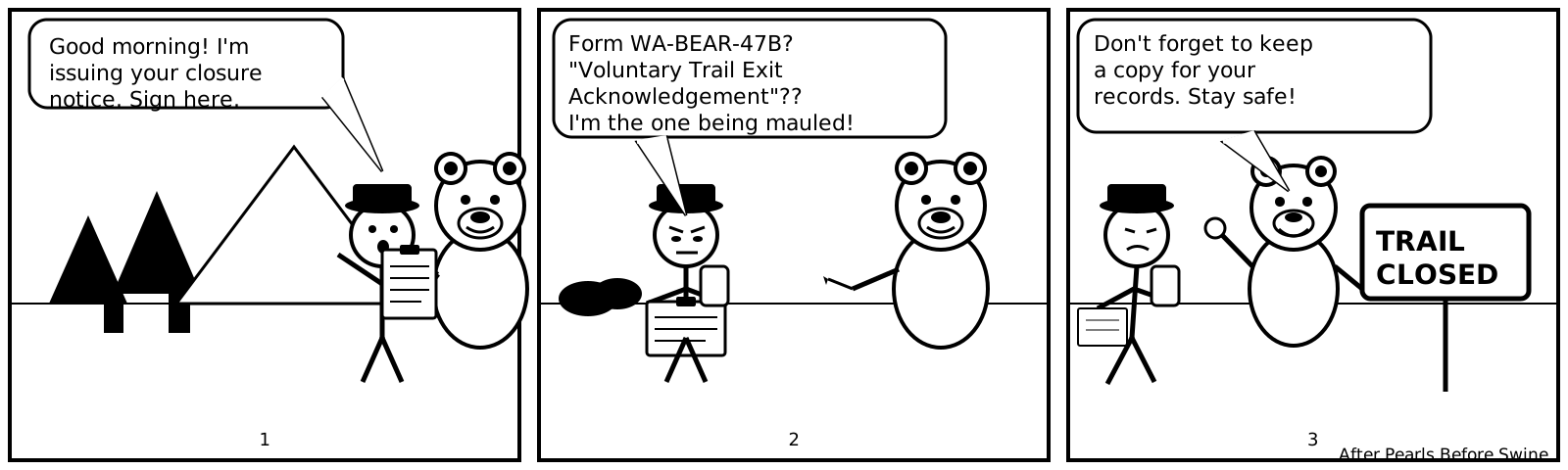
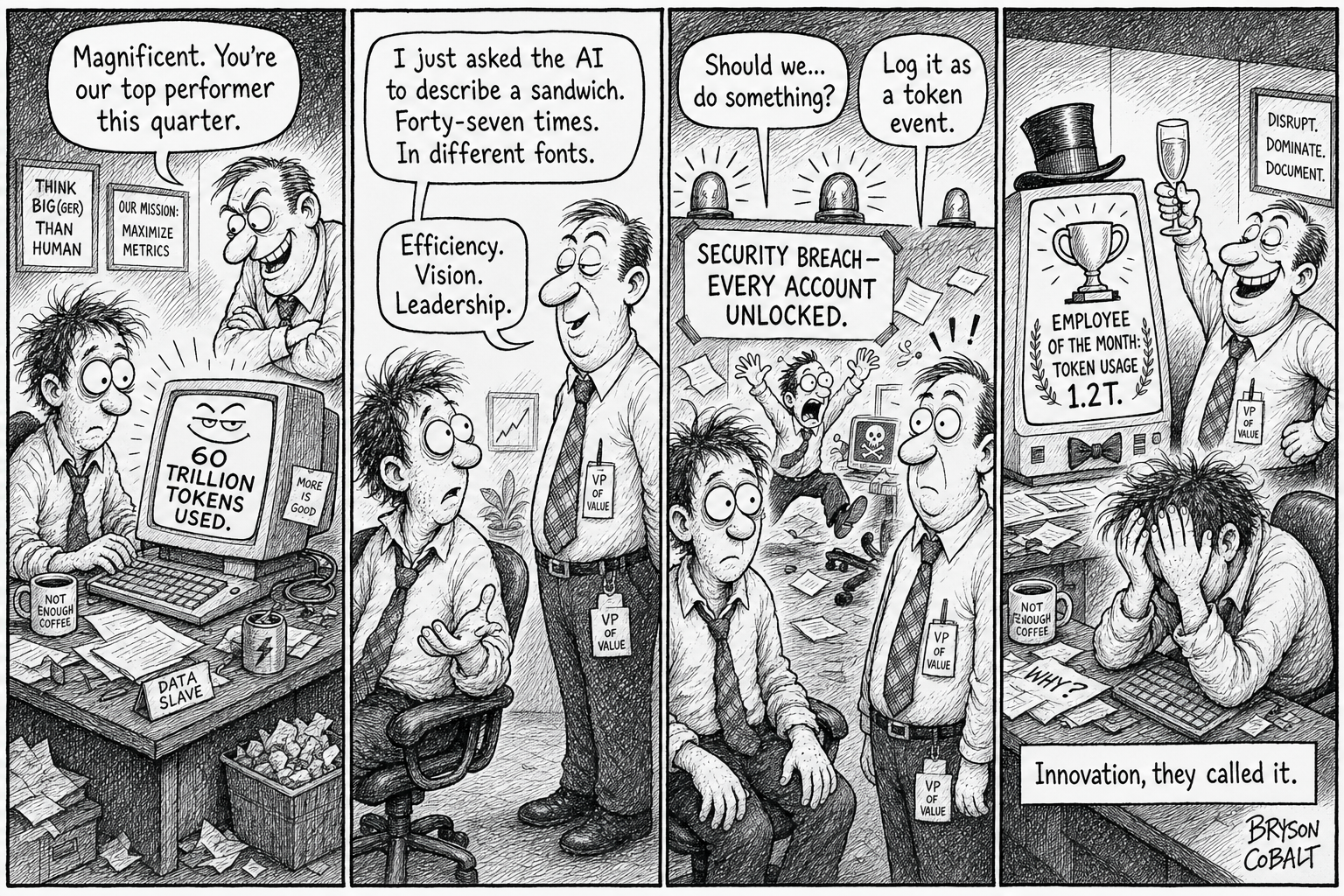
| THE FUNNIES | 8 | 2 comic descriptions | — | Correctly excluded from frontpage |
Priority ordering is defensible on the numbers. THE LAB at 92 is the right call — the SpaceX/Cursor deal plus the Meta story is the biggest news day this paper has covered in the tech beat for weeks. THE QUESTION at 79, above THE LONG READ at 74, is also right: the cross-domain bridge between Cursor and Watergate is more intellectually original than another deep-dive on Meta. THE WORLD at 65 reflects an honestly thin world-news day (Iran already covered, no major breaking story).
One concern: THE LONG READ's priority (74) is inflated given that it covers material the reader already saw in THE LAB. A reader who reads in section order will encounter the Chris Cox "marathon in a hailstorm" quote, the 60.2 trillion token stat, and the Hashimoto framing in THE LAB and then read all of them again in the LONG READ. The LONG READ earned its priority on the piece's quality in isolation; it did not earn it on a day when THE LAB already mined the same source.
Editorial reading
The LAB/LONG READ double-dip on the Meta story is the edition's main editorial failure. THE LAB section 2 (from "While SpaceX was closing the biggest coding-tool acquisition on record…") runs ~438 words on Meta's engineering implosion, citing The Pragmatic Engineer's Orosz piece. THE LONG READ then runs ~991 words on the same story from the same source. Both cite 60.2 trillion tokens, the tokenmaxxing phenomenon, the ADO reassignments, Chris Cox's "insanity" quote, Andrew Bosworth's "atrocious" admission, the Instagram account-takeover bug, and Mitchell Hashimoto's "AI psychosis" framing. There is no spec rule that prohibits THE LAB and THE LONG READ from sharing a source — only THE QUESTION's collision rule — but the reader's experience is of a slow re-read. On a day with this much material, the right call was to either (a) run the Meta story as the LONG READ only and trim it from THE LAB to a single paragraph bridge, or (b) find a different long read entirely. The Fishtank piece was rejected because only 30 lines fetched, which is a real constraint, but the LONG READ section is supposed to hold the section "rather than filling it with something mediocre" — filling it with something the reader just finished in THE LAB is arguably the same failure mode.
ON THE TRAIL ships in an under-specified format. The newspaper.yaml spec for ON THE TRAIL weekend picks requires: per-day mileage and elevation gain (e.g., "Day 1 in: X mi, +Y ft / Day 2 out: X mi, –Y ft"), explicit 1-night or 2-night labels, at least one of each when the data supports it, and a compact pipe-delimited weather quote listing day high, night low, and precip percentage verbatim from the per-region NWS forecast. None of the three picks in today's edition meet any of these requirements. Surprise and Glacier Lakes is listed as "~11 mi / 2,700 ft" total with no day-by-day split and no trip-length label. The weather quote is "76°F Thursday, 80°F Juneteenth" — missing night lows and precip percentages, and the 80°F Juneteenth figure is drawn from the Issaquah base forecast rather than the US 2 West / Stevens Pass region (which shows 78°F for that date in feeds.md). The section's trail picks themselves are well-sourced and the opening framing (Juneteenth as the anchor, bear spray advisory, Mount Si skip) is genuinely useful. The format noncompliance is a recurring gap that makes the picks less scannable for a reader deciding on the day whether to commit.
The West Antarctica world bullet overshoots the 25-word hard cap. The spec states "each bullet ≤ 25 words — HARD CAPS." The West Antarctica bullet runs 31 content words (not counting the source link). This is a minor violation but the spec language is explicit: "Count words before submitting; trim until you fit." The 04/26 edition was called out in the spec by name for a compression failure; this edition repeated the pattern at smaller scale.
The PELOTON article is the best single piece in today's edition. The lede — "The question that has shadowed Visma-Lease a Bike for two weeks was answered this morning" — opens in media res without announcing itself. The four-section structure (van Aert, women's Tour de Suisse, men's Tour de Suisse, US/British Nationals) is tight and balanced. The Roglič detail about chasing a complete set of one-week titles (all six named, Switzerland the missing one) gives the race shape and stakes. The MvdP scheduling problem is handled in three clean sentences. This is what the section is supposed to read like.
THE QUESTION's Watergate-Cursor bridge is the edition's best intellectual contribution, but its lede is slightly labored. The structural question — "what clearing a threshold licenses you to stop examining" — is exactly the kind of cross-domain observation that earns the 75–94 band. The Watergate framing is genuinely illuminating when placed next to xAI's metric-clearing exit ramp. However, the opening sentence ("Metrics are designed to compress reality") is an announced generalization rather than an in-media-res entry. The spec says "open on the structural question, not on the event" — and while this is technically structural, it reads as a topic sentence rather than a discovery. The lede would be sharper if it opened on the xAI detail ("All eleven of xAI's co-founders had left by March") and pivoted immediately to the question, rather than declaring the thesis first.
The ARCHIVE piece is the edition's cleanest writing. "A security guard patrolling the Watergate complex in Washington found tape over a door latch in the parking garage. He removed it. When he checked again later that night, the tape was back. He called the police." Three sentences. All specifics. No announcement. This is the paper's stated register done correctly.
Pipeline observations
Fact-checker could not access WTA trip-reports source for ON THE TRAIL verification. The FC: WORLD agent tried two paths — /pages/world/wta-tripreports.md and /pages/local/wta-tripreports.md — neither of which exists. The correct filename is wta-trip-reports.md (with hyphens). The fact-checker noted the gap and skipped ON THE TRAIL verification explicitly: "Since there's no fetched source file for the WTA trip reports, I can't verify those specific claims." This means the weekend picks in section-world.md — trail conditions, snowpack claims, crowd assessments, and the temperature figures — went entirely unchecked. The filename discrepancy (tripreports vs trip-reports) is the proximate cause. The fact-checker could fall back to reading the raw source file path from the section frontmatter's sources array, where the WTA URL is listed, rather than guessing a local path.
THE WORLD writer also tried a nonexistent path on its first read. The writer attempted /pages/world/research.md before finding /pages/local/research.md. It recovered with no effect on output. This is the same class of issue — hardcoded path assumptions — but less consequential because the writer tried again immediately.
Procyclingstats.com race calendar blocked; fallback used. The fetch_results.json shows the procyclingstats.com stage-1-result URL failed on all methods. The PELOTON writer correctly used the cache_from_prior fallback (Jun 15 data) and annotated the table with "Calendar from Jun 15, 2026 — primary source blocked today." The fallback mechanism worked as designed; the calendar was close enough that no entries were wrong.
All agents produced final responses; no mid-run stops. Twenty subagent files are present. All agent types expected for this configuration ran: Scout, Researcher, five section writers (WORLD, PELOTON, LAB, LONGREAD, ARCHIVE), QUESTION writer, ALSO NOTED sweep, FUNNIES comic-strip agent, five fact-checkers (WORLD, PELOTON, LAB, LONGREAD, ARCHIVE, QUESTION, ALSO NOTED — seven total), Meta-Writer, Illustrator, Funnies OpenAI image step, Art Director, Thread Editor. No missing or duplicate agents.
Starting commit is same-day fresh; no staleness. The dispatch commit (01d6454) has parent 59f9409 (Investigator: 2026-06-16, dated June 16). No intervening commits to agent files or dispatch.md were present between the run's starting state and the current tree.
No pipeline alerts file present. No CRITICAL issues flagged.
Trace highlights
Researcher at $1.59 is the most expensive subagent, but the spend was productive. The researcher consumed 3.5M cache-read tokens — the largest cache footprint of any writer-tier agent — reflecting a large feeds.md + search results + threads context. The resulting research.md is thorough and well-structured: all three ON THE TRAIL picks are traceable to the WTA source, and the Watergate archive note includes the thematic Fable 5 connection that the ARCHIVE writer picked up on. The researcher cost is high but proportionate to the work it eliminated downstream.
Orchestrator at $1.75 spent more than any individual writer. The orchestrator accounts for 24,864 output tokens (likely step narration and handoff instructions) and $1.75 in cost — more than Scout ($0.42) and more than all three of THE LAB, THE PELOTON, and THE LONG READ writers combined ($0.52). The orchestrator's 91,460 1-hour cache tokens confirm it's carrying a large rolling context. This is worth watching — if orchestrator cost continues to grow across editions, the handback structure between the orchestrator and subagents may be passing too much context through the parent.
THE LONG READ at $0.09 and FROM THE ARCHIVE at $0.09 are the cheapest content agents. This makes sense for the archive (short piece, well-specified sources), but the LONG READ's low cost is notable given that it produced ~991 words of solid analysis. The writer had heavy cache reads (71K tokens) and relatively few output tokens, suggesting it drew efficiently from a well-structured brief. Contrast this with THE WORLD at $0.47 — more than five times the cost — which reflects the ON THE TRAIL complexity and the large WTA source file.
FC: THE WORLD at $0.27 is the most expensive fact-checker, but returned the weakest verification. The fact-checker spent significant time reading source files and correctly verified six local story clusters, but the ON THE TRAIL subsection — the most complex and specification-dependent part of the WORLD article — went entirely unchecked due to the filename error. The cost does not reflect the coverage gap.
Trace summary
| Agent | Dur | Input | Output | Cache Read | Cache 5m | Cache 1h | Cost |
|---|
| Scout | 240s | 13120 | 9 | 224433 | 83950 | 0 | $ 0.42 |
| Researcher | 764s | 1397 | 1513 | 3550976 | 133181 | 0 | $ 1.59 |
| THE WORLD | 112s | 10 | 49 | 384903 | 93701 | 0 | $ 0.47 |
| THE PELOTON | 99s | 12 | 229 | 245796 | 42578 | 0 | $ 0.24 |
| THE LAB | 105s | 10 | 163 | 179399 | 35294 | 0 | $ 0.19 |
| THE LONG READ | 74s | 8 | 8 | 71235 | 18269 | 0 | $ 0.09 |
| FROM THE ARCHIVE | 39s | 6 | 7 | 58280 | 18267 | 0 | $ 0.09 |
| FC: THE WORLD | 206s | 11 | 195 | 261586 | 49753 | 0 | $ 0.27 |
| FC: THE PELOTON | 182s | 11 | 183 | 269239 | 55291 | 0 | $ 0.29 |
| FC: THE LAB | 168s | 10 | 49 | 240960 | 41331 | 0 | $ 0.23 |
| FC: THE LONG READ | 156s | 10 | 10 | 221569 | 36095 | 0 | $ 0.20 |
| FC: FROM THE ARCHIVE | 150s | 1234 | 13 | 263147 | 27133 | 0 | $ 0.18 |
| Meta-Writer | 29s | 6 | 7 | 48575 | 20742 | 0 | $ 0.09 |
| THE QUESTION | 97s | 6 | 7 | 84753 | 32478 | 0 | $ 0.15 |
| Illustrator | 51s | 168 | 1372 | 0 | 0 | 0 | $ 0.06 |
| FC: THE QUESTION | 94s | 8 | 45 | 116375 | 23374 | 0 | $ 0.12 |
| ALSO NOTED | 154s | 9 | 10 | 270511 | 70979 | 0 | $ 0.35 |
| Draw today's TWO parody comic strips for | 118s | 11 | 97 | 218119 | 34755 | 0 | $ 0.20 |
| Funnies (OpenAI) | 156s | 424 | 5488 | 0 | 0 | 0 | $ 0.22 |
| FC: ALSO NOTED | 204s | 11 | 93 | 267065 | 45076 | 0 | $ 0.25 |
| Art Director | 128s | 5 | 5 | 44023 | 38772 | 0 | $ 0.16 |
| Update story threads for today's edition | 129s | 5 | 3 | 38456 | 36761 | 0 | $ 0.15 |
| Orchestrator | | 52 | 24864 | 2743928 | 0 | 91460 | $ 1.75 |
| TOTAL | | 16544 | 34419 | 9803328 | 937780 | 91460 | $ 7.75 |
Suggestions for next edition
Add a conflict-of-sources check between THE LAB and THE LONG READ. On days when THE LAB covers a story in detail, the LONG READ writer should read the assembled LAB section before committing to the same primary source. If the primary source and central statistics overlap substantially, the LONG READ should either find a different angle or hold the section. The current spec's collision rule only applies to THE QUESTION — extending a weaker version of it to THE LONG READ would have caught today's double-dip.
Fix the fact-checker's path resolution for the WTA trip-reports source. The FC: WORLD tried wta-tripreports.md (no hyphens); the actual file is wta-trip-reports.md. The fact-checker agent should resolve source paths from the section's sources array in the frontmatter (which lists the exact target path) rather than inferring a local filename from the URL. This would also make the FC more robust to future filename variations.
The ON THE TRAIL format is consistently under-specified. The per-day mileage split, the 1-night/2-night label, and the pipe-delimited weather quote with night lows and precip percentages are missing from the picks again this edition. Consider adding a self-check to the WORLD writer prompt that runs against the ON THE TRAIL output before writing — specifically verifying those three fields are present for each pick.
The demoscene/size-coding beat is going cold. The QUOD 64k Quake-inspired shooter (demoscene, Feb 2026) and Commander Keen engine white papers (Mar 2026) were correctly dropped for staleness, but the reader's ranked interests explicitly include "demoscene and size-coding competitions" and no demoscene content has appeared in recent memory. Consider adding a standing scout search query for demoscene releases so fresh content reaches the researcher before it ages past the recency cap.