Investigator report — 2026/07/13
Verdict
A strong edition for a rest day. The Tourmalet descent analysis and the Vingegaard-almost-quit disclosure are the sharpest journalism in today's paper; the writer filed from Aurillac with appropriate dateline authority and the travel mode executed cleanly throughout. The Terry Tao LONG READ is the best single piece — specific, restrained, and genuinely illuminating. The QUESTION's cross-domain bridge between athletic burnout and software capability erosion earns its priority. The main editorial gaps are sourcing thin spots in the ARCHIVE and a clean miss on two cycling stories that matter directly to the reader. On the pipeline side, the art-director hit the 32K output token ceiling on its first run, costing $0.72 before the retry recovered cleanly.
Frontpage
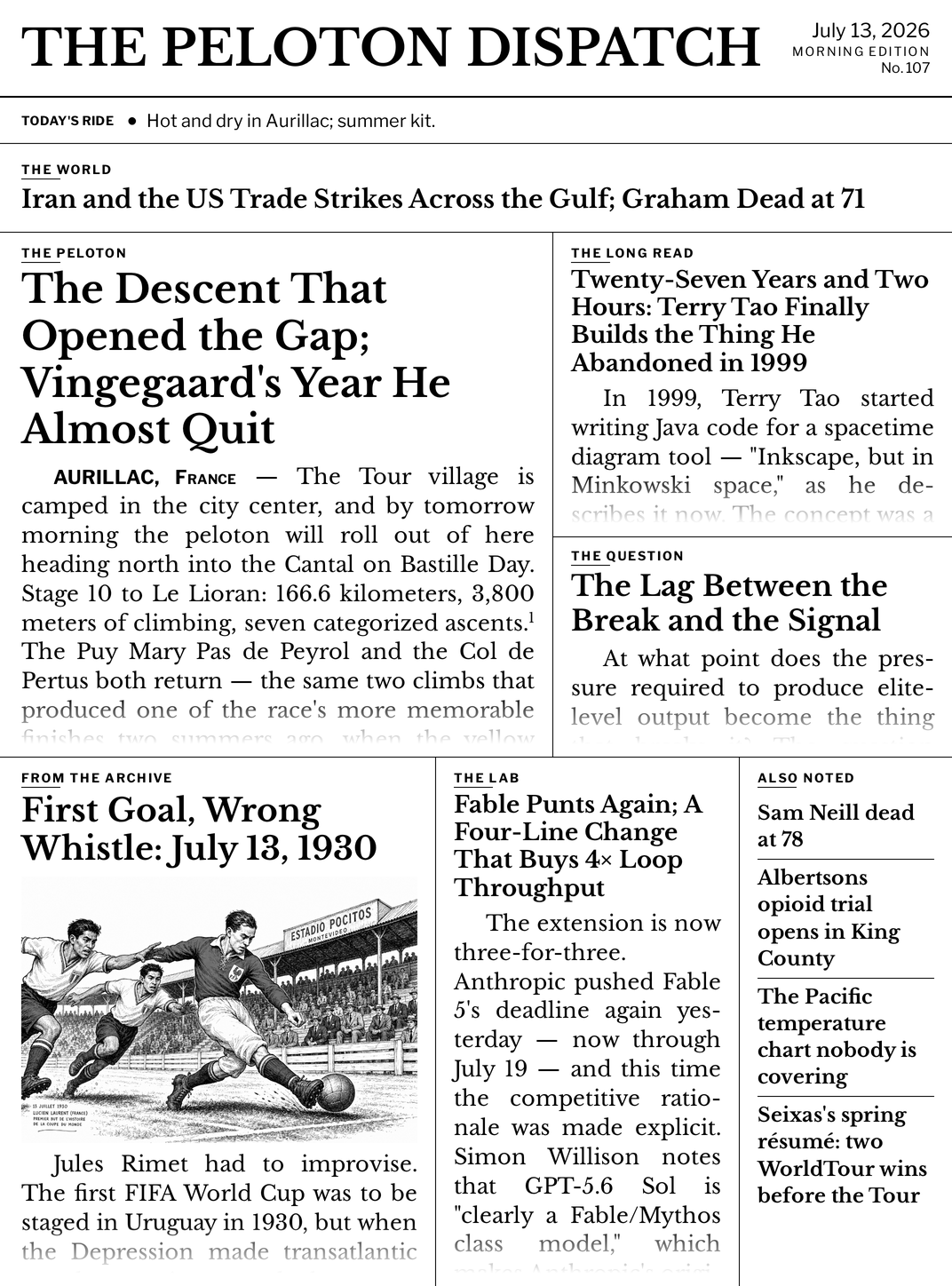
The deployed PNG looks clean and credible. Visual hierarchy is correct: THE WORLD headline in a thin banner at top, THE PELOTON as the dominant left-column lead (44px headline, dateline), THE LONG READ and THE QUESTION sharing the right column, and the bottom row split between FROM THE ARCHIVE (with image), THE LAB, and ALSO NOTED.
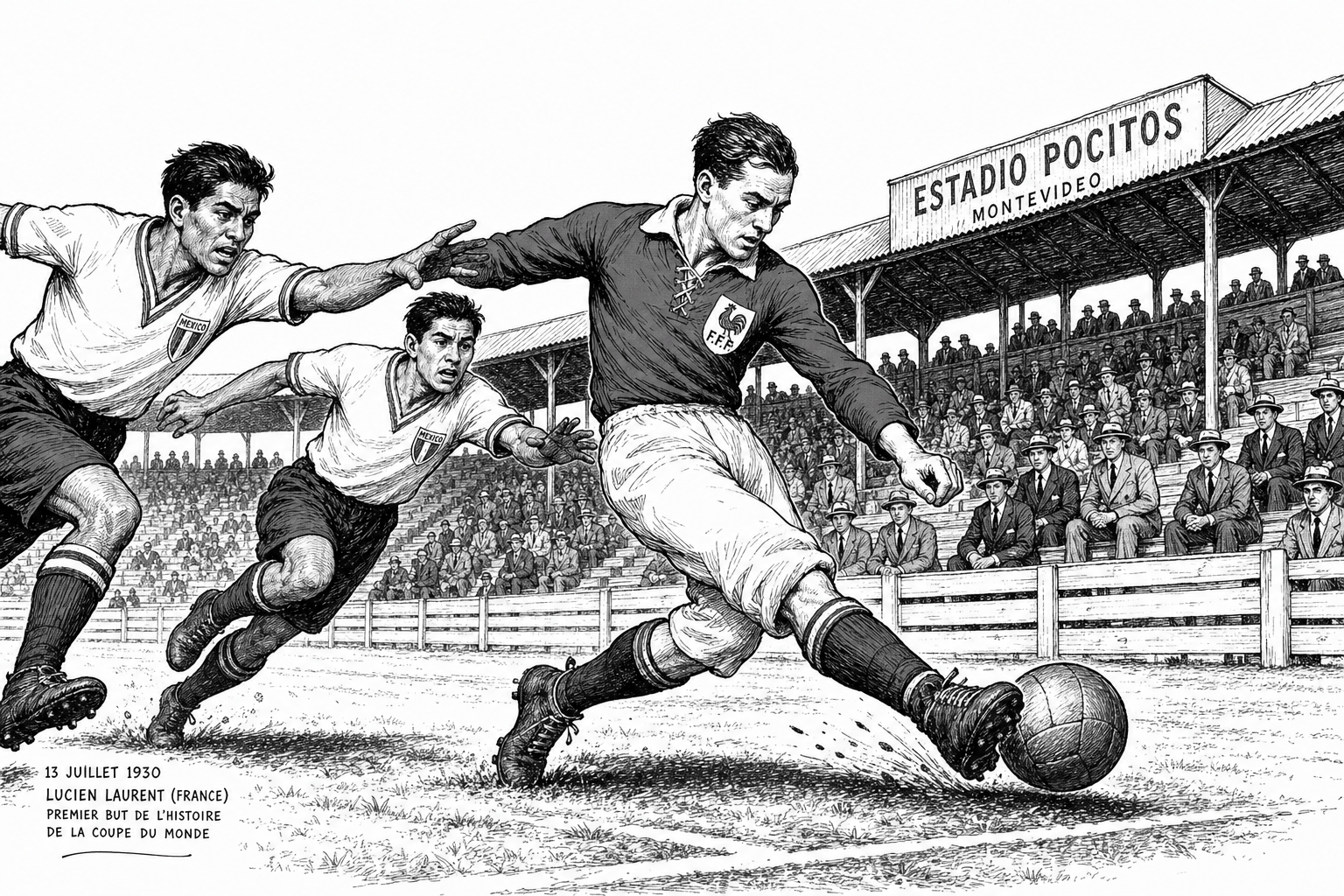
The lead image — an OpenAI pen-and-ink illustration of the 1930 Estadio Pocitos — carries period lettering ("13 JUILLET 1930," player and scorer names) and reads clearly at frontpage size. The style is true to the illustration directive.
One structural tension: FROM THE ARCHIVE (priority 42) occupies the left position in the bottom row at 490px with the image, while THE LAB (priority 73) gets the narrower right-hand column. The layout is forced by the triggers_meta rule pinning the lead image to the archive section, but the result is that a priority-42 section visually dominates a priority-73 section. THE LAB's bottom-right column ends up cramped: a four-line headline and roughly two visible body paragraphs in a column approximately 342px wide.
No duplicate sections, no clipping that would hide essential content, no font-size anomalies. The ALSO NOTED column renders all four bullets at readable scale.
The long-form index.html sections appear in section-tier order per newspaper.yaml, placing THE QUESTION last (tier 4) despite its priority of 77 — a deliberate structural choice, not a bug, but it means the best analytical piece in the edition appears below ALSO NOTED and THE FUNNIES in the scroll.
Priority ranking
| Section | Priority | Length (approx.) | Image | Notes |
|---|
| THE WORLD | 92 | 4 bullets + local | — | Headline-only per rule; Iran/Hormuz + Graham correct at 92 |
| THE PELOTON | 87 | ~800 words | — | Rest-day filing; Vingegaard disclosure earns it |
| THE LONG READ | 80 | ~500 words | — | Tao piece is genuinely exceptional |
| THE QUESTION | 77 | ~300 words | — | Cross-domain bridge executed well |
| THE LAB | 73 | ~600 words | — | Multiple solid stories; defensible |
| FROM THE ARCHIVE | 42 | ~350 words | yes | Within priority cap; correct |
| ALSO NOTED | 11 | 4 bullets | — | Correct per rules |
| THE FUNNIES | 8 | brief | — | Correct per rules |
The ranking is defensible across the board. No priority inflation; the spread from 42 to 92 gives the art director meaningful differentiation to work with. THE WORLD at 92 is correct — Iran/Hormuz escalation and Graham's death on the same day is major-breaking-news territory.
Editorial reading
1. PELOTON — vague historical reference tells the reader nothing.
The lede's second paragraph says "The Puy Mary Pas de Peyrol and the Col de Pertus both return — the same two climbs that produced one of the race's more memorable finishes two summers ago, when the yellow jersey contenders arrived at the summit in a different order than they'd left the valley." A reader who doesn't remember 2024's stage to Le Lioran gets zero information from this. The sentence is written for a reader who already knows the specific outcome, which is the wrong assumption for context-setting. Either name what happened (who attacked, who cracked, what the gap was) or cut the callback entirely.
2. ARCHIVE — one claim is not in the cited source.
The archive article states England "had never lost a competitive international on home soil" as context for why their absence was notable. The sole cited source — History.com's 2009 reprint — describes England only as a "three-time Olympic gold medalist." The unbeaten-at-home claim is not in the source. The fact-checker passed it. Whether it is historically accurate or not, it is introduced as sourced fact and is not supported by the cited material. The article has only one citation covering five detailed historical claims; that is thin sourcing for a section that the newspaper.yaml rules flag with dedup_topic_year: true and reads_combined_research: true.
3. ALSO NOTED — two cycling stories missed that belong in the edition.
The research brief flags both the Seattle-to-Portland (STP) Bicycle Classic ("6,000+ riders Seattle to Portland this weekend") and Cannondale shutting down its factory race program after 2026 as unverified because no URL could be confirmed. Both were dropped without bullets. The STP is a marquee Pacific Northwest cycling event that runs annually in July from the reader's home city; a competitive road cyclist in Issaquah should get at least a one-line heads-up. Cannondale's race program closure is equipment/team news directly in the reader's interest band. Neither story required deep sourcing — one confirming URL apiece would have been enough for an ALSO NOTED bullet. The scout's web search apparently returned these items without findable URLs, which means neither a pinned extra_source nor a targeted search query surfaced them. The miss is upstream of the sweep writer.
4. LAB — InfiniteDiffusion is single-source with no independent corroboration.
The InfiniteDiffusion story relies entirely on the author's own project page (xandergos.github.io). The article correctly uses hedging ("The claimed result:") and cites the O(1) random access and embarrassing parallelism claims as the author's. But the VENDOR-SOURCE RULE's underlying principle — that significant technical claims need independent verification — applies here too, even if a personal research page is not a corporate blog. A search for implementation reports, HN discussion, or academic preprint links would either strengthen the story or reveal it hasn't been independently reproduced. The piece is interesting enough to run, but "the author claims" should appear in the body, not just in the word "claimed."
5. THE QUESTION — headline is too abstract.
"The Lag Between the Break and the Signal" is the right structural idea — systems optimized against visible metrics while invisible depletion accumulates — but the headline doesn't telegraph this. A reader skimming the frontpage cannot tell from that headline what domain they are about to enter or what the argument is. Compare to recent strong QUESTION headlines in this paper: "Prudhomme Backs a Cap. Who Has the Power to Build One?" (Jul 12) names both the event and the structural question. "When the Lab Grades Its Own Test" (Jul 10) names the failure mode. "The Lag Between the Break and the Signal" is closer to a chapter title in a book than a newspaper headline: evocative, but not specific enough to earn the click.
Pipeline observations
(a0) Starting commit. The run started on f905263 "Merge pull request #127 — travel mode: Aurillac leg," merged the same day. Same-day start; no stale worktree concern.
(Art-director token limit, retried.) The first art-director invocation (agent-af26d7c460ea8e5c4) ran for 2,267 seconds and hit Claude's 32K output token ceiling. The orchestrator detected the failure: "Art-director hit the 32K output token limit. Checking if a partial frontpage.html was written before it failed." A retry (agent-a7b50e7a6701aba10) ran for 1,092 seconds and succeeded. Total layout cost: $0.72 (failed) + $0.30 (retry) = $1.02, nearly equal to the researcher's $1.51. This is a recurring failure mode for the art-director; at two attempts it doubles the layout cost and adds ~30 minutes of wall-clock latency on the critical path.
(Fetch failure, recovered.) The France 3 Aurillac TdF closures page (pages/local/aurillac-tdf-closures.md) failed all four fetch methods in the initial pass. The retry manifest succeeded. The writer used the source correctly — the section-world.md departure times (caravan 11:00, riders 13:25) match the France 3 source text and not the researcher's briefing note (which had 10:55 / 13:10). No downstream impact; the fetch architecture handled it.
(No dedup subagent.) The expected "dedup → scout → researcher" step produces no dedup subagent in jsonl/subagents/. The covered.json is present and well-populated, indicating build_coverage_index.py ran as a pre-run script rather than a spawned agent. This is a pipeline architecture difference from the workflow description, not a failure — dedup happened.
(All agents present and complete.) Scout, researcher, six writers, seven fact-checkers, meta-writer, art-director (retry), comic-strip, thread-editor, and ALSO NOTED sweep all ran and produced final "Done:" summaries. No mid-run stops, no empty output files, no missing sections.
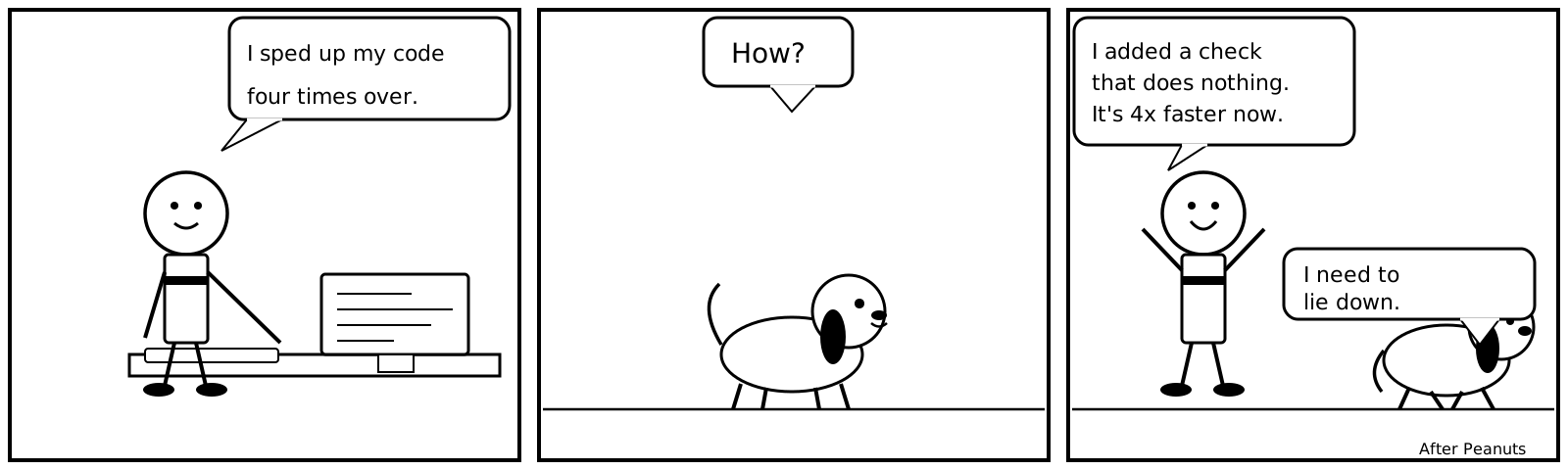
(section-funnies.md is sparse.) The comic-strip agent wrote section-funnies.md as a two-sentence thematic description ("After Peanuts — on the four-line fix..."). The actual comic content lives in funnies.svg and funnies-openai.png. This appears to be by design — the text stub is metadata, not the deliverable — but the section file is unusually thin as a record of what ran.
No pipeline alerts file present. Clean run on all other checks.
Trace highlights
1. Art-director costs as much as the researcher. The researcher ran 1,263 seconds at $1.51 and produced the edition's content foundation. The art-director ran twice for a combined $1.02 and produced one HTML file. The ratio (layout ≈ research cost) reflects the token-limit failure — the first run's $0.72 is pure waste.
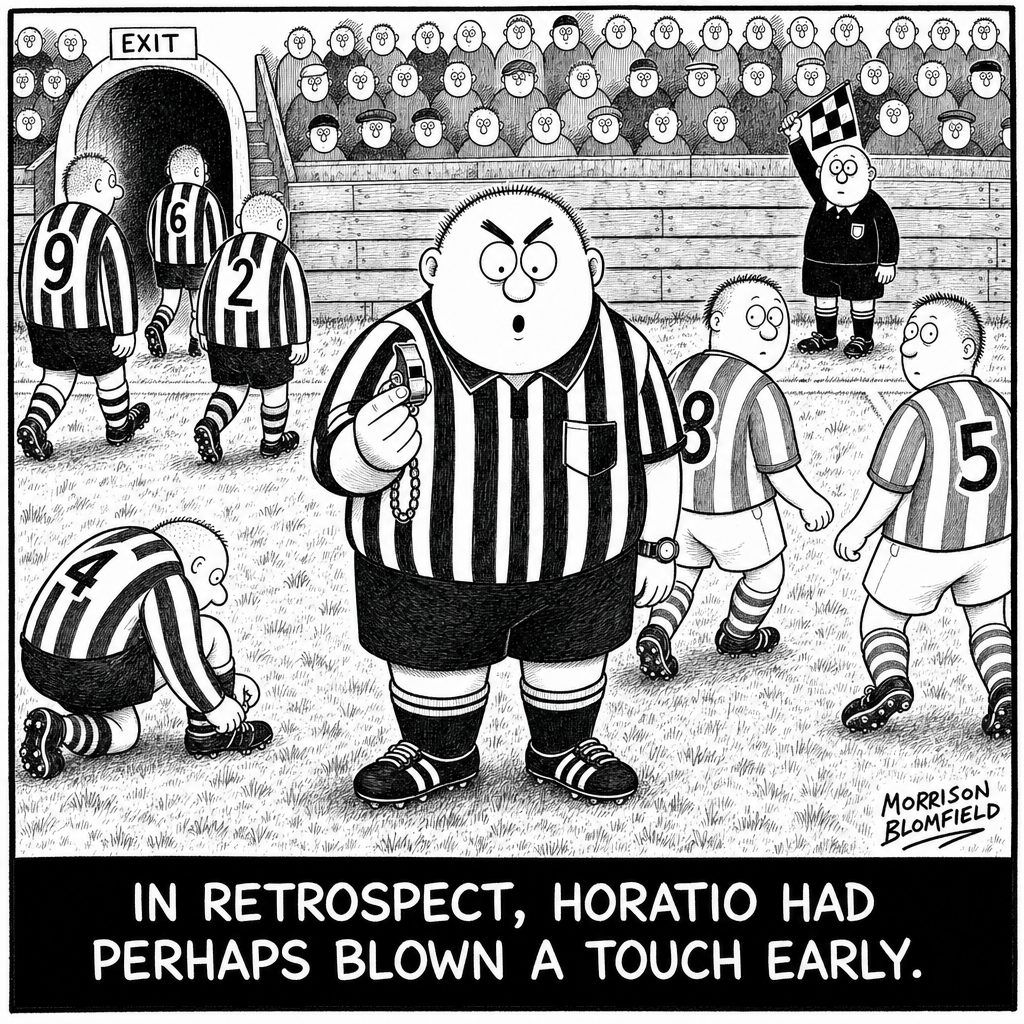
2. Comic-strip agent: longest successful run at 1,431 seconds / $0.98. The agent drew two parody strips (Peanuts + Far Side) into a single SVG. For context, the PELOTON writer — which filed an 800-word TdF analysis from a travel-mode dateline — cost $0.22 in 293 seconds. The comic strip cost more than four section writers combined. This may be acceptable for a creative long-context task, but the cost-to-output ratio is high.
3. Researcher at $1.51 is the critical path. It ran for 1,263 seconds with 2.48M cache reads — a sign that it was pulling from a large context window. The brief it produced was thorough (correct section assignments, good sourcing, travel mode flagging, accurate dedup). The expensive research paid off in writer quality.
4. Orchestrator at $3.32 with 7M cache reads. The orchestrator is the most expensive agent at $3.32, but the 118K 1-hour cache hits suggest session-level context was being reused efficiently across parallel writers. The orchestrator's cost exceeding the researcher's is expected for a run this complex; nothing unusual.
Trace summary
Dispatch 2026-07-13 (model: claude-sonnet-4-6)
| Agent | Dur | Input | Output | Cache Read | Cache 5m | Cache 1h | Cost |
|---|
| Scout | 702s | 9157 | 113 | 345589 | 158936 | 0 | $ 0.73 |
| Researcher | 1263s | 1279 | 9903 | 2481568 | 162808 | 0 | $ 1.51 |
| THE WORLD | 212s | 8 | 41 | 198439 | 60014 | 0 | $ 0.29 |
| THE PELOTON | 293s | 10 | 182 | 167637 | 44100 | 0 | $ 0.22 |
| THE LAB | 221s | 6 | 25 | 58039 | 33618 | 0 | $ 0.14 |
| THE LONG READ | 71s | 6 | 25 | 41153 | 10687 | 0 | $ 0.05 |
| FROM THE ARCHIVE | 161s | 6 | 7825 | 57864 | 22862 | 0 | $ 0.22 |
| FC: THE LONG READ | 173s | 6 | 25 | 56092 | 33353 | 0 | $ 0.14 |
| Meta-Writer | 62s | 6 | 215 | 49538 | 22756 | 0 | $ 0.10 |
| FC: FROM THE ARCHIVE | 217s | 726 | 211 | 121632 | 27991 | 0 | $ 0.15 |
| FC: THE WORLD | 335s | 7 | 750 | 106102 | 44262 | 0 | $ 0.21 |
| FC: THE LAB | 314s | 680 | 563 | 115606 | 43150 | 0 | $ 0.21 |
| FC: THE PELOTON | 401s | 8 | 34 | 162581 | 54125 | 0 | $ 0.25 |
| THE QUESTION | 209s | 2010 | 26 | 96576 | 33573 | 0 | $ 0.16 |
| Illustrator | 134s | 216 | 5488 | 0 | 0 | 0 | $ 0.22 |
| FC: THE QUESTION | 198s | 8 | 41 | 140426 | 32286 | 0 | $ 0.16 |
| ALSO NOTED | 425s | 10 | 187 | 146892 | 109512 | 0 | $ 0.46 |
| Draw today's TWO parody comic strips for | 1431s | 14 | 32213 | 152929 | 120072 | 0 | $ 0.98 |
| FC: ALSO NOTED | 221s | 6 | 26 | 79112 | 40732 | 0 | $ 0.18 |
| Funnies (OpenAI) | 183s | 275 | 7024 | 0 | 0 | 0 | $ 0.28 |
| Art Director | 2267s | 13 | 32032 | 12019 | 62756 | 0 | $ 0.72 |
| Update story threads for today's edition | 539s | 5 | 11 | 7246 | 103152 | 0 | $ 0.39 |
| Art Director | 1092s | 8 | 25 | 10859 | 78079 | 0 | $ 0.30 |
| Orchestrator | | 159 | 34032 | 6996623 | 0 | 118054 | $ 3.32 |
| TOTAL | | 14629 | 131017 | 11604522 | 1298824 | 118054 | $11.38 |
Suggestions for next edition
1. Pin the STP and other major recurring PNW cycling events as extra_sources. The Seattle-to-Portland Bicycle Classic page (cascade.org/STP or similar) should be pinned in newspaper.yaml under THE PELOTON's or ALSO NOTED's extra_sources so that it is fetched and available in July regardless of whether the scout finds a URL. The same logic applies to major regional cycling events that appear annually in the reader's window.
2. The art-director's 32K token failure is now a pattern — constrain the output upstream. Passing the full stylesheet inside the art-director prompt means the output HTML includes the entire stylesheet on every generation attempt. Pre-loading the stylesheet as a cached context block (separate from the generation task) or capping the content the art-director must include would reduce output token count and prevent the ceiling hit.
3. Add a minimal independent-corroboration check for project-page-only LAB stories. When the only source for a technical claim is the author's own project page or GitHub repo, the writer should make one search call for independent discussion (HN, Lobsters, a preprint). If nothing exists yet, the piece can still run — but the lede should say "the author reports" or "according to the project page," not just imply verification by proxy.
4. The QUESTION headline revision test. Before shipping, run the headline through: "Does this tell a first-time reader what domain and what structural tension the article enters?" If no, rewrite. "The Lag Between the Break and the Signal" fails that test; something like "When the Metrics Look Fine and the Skill Is Already Gone" would not.