Front page — July 4, 2026
The Peloton Dispatch July 4, 2026 No. 98
● Sunny, 72°F, light winds — ride outside today. · summer kit

THE PELOTON

The Ramps Go Down: Tour de France Grand Départ Opens in Barcelona

↩ Developing story — first reported Jul 01 · previously Jul 02, Jul 03

— The ramps go down at 17:05 on the Passeig de Gràcia this afternoon, and for the first time since Eddy Merckx's Molteni team won an 11-kilometre opener in Mulhouse in 1971, the Tour de France begins with a team time trial.1 The 113th edition covers 3,333km over 21 stages; the first 19.6km end on Montjuïc. As this paper reported yesterday, the new individual-timing format means each GC rider takes his own time at the line rather than the fourth man's benchmark, turning the Côte de Montjuïc (1.1km at 5.1%) and its final 800m ramp to the Olympic stadium into a de facto punchy stage race in miniature, with teams launching their leaders at the moment of their choosing.2

What the pre-race coverage could not show was the machinery. Cyclingnews's Grand Départ tech gallery, assembled at the team hotels in Barcelona, documents an aero arms race that has reached the level of compulsive detail-obsession: chainring spider bolt heads covered with precisely-cut sticker circles, rear derailleur arm holes sealed, saddle clamp dials hidden under custom-shaped tape. Visma-Lease a Bike pressed a 3D-printed plastic bung into the seatpost sliding rail hole on their time trial bikes. Filippo Ganna had his chainring spider bolts taped. Alpecin marked each rider's bike with different-colored sticker strips so riders can slot back into the TTT line at maximum heart rate without thinking about which machine is theirs.

Two prototype items drew particular attention. A new POC helmet — apparently the heir to the Tempor — was on display and came in at approximately 350g by feel.3 KASK had new lids at the Ineos truck, though details there were scarce. At Specialized, Evenepoel's Shiv TT is being upgraded with a new front wheel. More curious was Pogačar's time trial setup: the bike was configured 1X, but with two satellite shifters installed in the positions where a second front-mech lever would normally sit. Either the mechanics were pre-configuring a 2X race-day build and the extra shifters will be live when it matters, or they are, as Cyclingnews noted, dead weight on a bike already running single-ring. The mechanics were not clarifying.


France's Interior Ministry moved this week to put in writing what had been an informal arrangement. Interior Minister Laurent Nunez circulated guidance to regional prefects before today's Grand Départ, stating they "may decide to cancel a stage when health or operational conditions no longer allow us to simultaneously ensure the safety of spectators, mobilised personnel and the continuity of the response to emergencies for the population." The measure is exceptional and requires consultation with ASO and other stakeholders — it is not a unilateral kill switch — but the written prefectural authority is new. It formalizes something the protocol did not previously make explicit.

ASO has hourly weather monitoring in place throughout the race. The caravan will distribute 2,500,000 hats or caps, 550,000 cans of water, and 400,000 litres of water along the route.4 For riders, the UCI's High Temperature Protocol activates at a Wet Bulb Globe Temperature of 28°C, at which point measures include adjusted start times, neutralized stage sections, and in extremis, cancellation. Tour director Christian Prudhomme confirmed his office was in contact with the Prime Minister's chief of staff on heat preparations on Thursday. A heatwave is forecast for the race's first Alpine week.


As the peloton assembles on the Passeig de Gràcia, the UCI has still not responded to the human rights letter that arrived before the start. FairSquare, BIRD, Sudan Unlimited, and CSW wrote to UCI president Lappartient requesting the suspension of UAE Team Emirates-XRG's licence, citing "irrefutable evidence" that the UAE is the RSF's primary financial backer and arms supplier — a claim drawn from UN expert reports, Amnesty International, Human Rights Watch, and US intelligence assessments. The UAE has repeatedly denied providing military support to the RSF. Domestiquecycling.com's June 30 publication of the letter adds Bahrain Victorious to the suspension request and carries FairSquare director Nick McGeehan's framing in full: "Cycling's sponsor-driven business model makes it easy prey for authoritarians looking for cheap and effective public relations. The UCI's failure to foresee this very obvious risk means that its most celebrated race now serves as a branding opportunity for a state linked to genocide."5 Neither the UCI nor either team has issued a public response.

In the margins of the pre-race press circuit, EF Education-EasyPost manager Jonathan Vaughters is running a parallel campaign. The team generated €98 million in media value during the 2025 WorldTour season, up from €84 million the year before,6 and Vaughters is targeting US-based international brands willing to invest around €30 million annually in a new title sponsorship. "There's no ink on paper yet, but it's going well," he told Cyclingnews in Barcelona. Decision-level VIP guests are attending stages during the race; Vaughters believes a strong run by Ben Healy — "the best breakaway rider in the world," in his assessment — or Richard Carapaz could close a deal. The main competition in those boardrooms, he says, is not other cycling teams but Formula 1.

On the Road Ahead
Calendar from Jul 3, 2026 — primary source blocked today
DateRaceCountry
Sat Jul 4 – Sun Jul 26 (Stages 1–21 remaining)Tour de FranceSpain / France
Sat Aug 1DSSK — Donostia San Sebastián KlasikoaSpain
Mon Aug 3 – Sun Aug 9Tour de PolognePoland
Sun Aug 16ADAC Cyclassics HamburgGermany
Sat Aug 22 – Sun Sep 13La Vuelta Ciclista a EspañaSpain
Sources
  1. Tour de France 2026 Hub — Stage 1 TTT Preview cyclingnews.com Jul 4, 2026
  2. Tour de France 2026 Rule Changes: TTT Individual Timing + Green Jersey Points Shake-Up bikeradar.com Jul 4, 2026
  3. Grand Départ Mega Tech Gallery: KASK/POC Helmets, Aero Tape, Two Prototype Bikes cyclingnews.com Jul 4, 2026
  4. French Regions Authorised to Cancel TdF Stages If Extreme Heatwaves Hit cyclingnews.com Jul 4, 2026
  5. Human Rights Groups Call on UCI to Suspend UAE Team Emirates-XRG Licence domestiquecycling.com Jun 30, 2026
  6. EF Education-EasyPost Title Sponsor Search: Vaughters "No Ink on Paper Yet, But It's Going Well" cyclingnews.com Jul 4, 2026

↑ Back to top

THE LAB

UE5.8 Adds an MCP Plugin; Alibaba Bans Claude Code for Its Own Engineers

↩ Developing story — first reported Jun 19 · previously Jun 20, Jul 03

The most useful thing in Unreal Engine 5.8 may be the feature buried furthest from the rendering notes. Epic has shipped an experimental MCP plugin — Model Context Protocol — that connects any LLM to a live UE project, exposing blueprints, assets, levels, materials, and meshes for querying, asset-building, or optimization passes.1 You pick the model; the plugin handles the bridge. Teams can extend it with their own functions. It ships experimental, but the architecture is the commitment.

UE5.8 also delivers two things the PCG community has been waiting for: manual edits on top of procedurally generated content that don't sever the procedural connection to upstream parameters — you can art-direct a generated city block and keep adjusting source parameters without destroying the overrides — along with complex attribute types (arrays, structures, sets, maps) and new spatial operation example graphs. Control Rig Physics moves to beta, adding modular ragdoll rigs that layer over existing animation with keyframed weight control, suitable for both full dynamic collapse and subtle secondary motion. A separate Control Rig Dynamics particle solver for runtime use runs at five times the speed of the original.1 The experimental Toon Shader, built on the Substrate framework, targets 2D and anime-style rendering across all UE5 platforms.

Since June 19, this paper has been tracking the UE6 architecture thread — Verse replacing C++, Scene Graph replacing Actors, LORE replacing Git. The thread flagged UE5.8's release as the expected final pre-UE6 milestone. It shipped.


The fingerprinting story this paper covered July 1 and 3 has produced its first concrete industry reaction. Alibaba has banned its own employees from using Claude Code and required deletion of all Claude models, The Information reports2 — a direct response to the discovery of hidden code that flagged users linked to China or Chinese AI labs. Simultaneously, ByteDance and Ant Financial are still accessing Claude Code through cloud services, overseas Singapore subsidiaries, and VPNs, circumventing Anthropic's terms of service, the Financial Times reports.2

The two impulses run in opposite directions: Alibaba cutting off a tool it deems compromised, while competitors route around the restriction to keep using it. Anthropic's Thariq Shihipar has characterized the fingerprinting as "an experiment from March" aimed at stopping account abuse and output distillation. That framing matters: Anthropic has previously accused Alibaba, DeepSeek, Moonshot AI, and MiniMax of using Claude outputs to train their own models — the behavior the fingerprint was designed to surface.


Mistral, in its own announcement, reports that Leanstral 1.5 — a formal verification model for Lean 4, Apache-2.0 licensed, 119 billion total parameters with only 6 billion active — saturates miniF2F completely at 100% on both validation and test sets, solves 587 of 672 PutnamBench problems, and sets new state-of-the-art marks of 87% on FATE-H and 34% on FATE-X, the graduate- and PhD-level abstract algebra benchmarks.3 The cost comparison is striking: approximately $4 per Putnam problem against an estimated $300 or more for Seed-Prover 1.5 at high settings, which budgets ten H20-GPU-days per problem.3 On Fermat's Last Theorem pull requests, Leanstral 1.5 raises pass@8 from 31.9 to 43.2 — above Opus 4.6 at one-seventh the cost.

The practical case study is more interesting than the benchmark table. Mistral ran Leanstral through 57 open-source repositories using an automated pipeline: Aeneas translates Rust code to Lean, Leanstral infers user intent and generates correctness properties, then attempts to prove or refute each one. Across 57 repositories, 47 violated properties were flagged, 11 pointed to genuine bugs, and 5 were previously unreported on GitHub. One: in the datrs/varinteger library, a sign function for zigzag decoding computes (value + 1) on input u64::MAX, causing a debug-mode crash and silent corruption in release. Fuzzing would typically miss it.

Sources
  1. Unreal Engine 5.8 Now Available unrealengine.com Jun 2026
  2. Claude Code's Complicated China Problem: Bans on Both Sides of the Pacific the-decoder.com Jul 3, 2026
  3. Leanstral 1.5: Apache-2.0 Formal Verification Model mistral.ai Jun 30, 2026

↑ Back to top

THE WORLD

Kettle's Transit Cut Would Erase 1.1 Million Bus Hours; Housing Accelerator Stalls

↩ Developing story — first reported Jun 26 · previously Jun 29, Jul 03


As this paper reported yesterday, D7 Councilmember Bob Kettle proposed cutting the Seattle Transit Measure from Wilson's 0.3% to 0.2%; The Urbanist's full accounting: Kettle's amendment would eliminate 1.1 million service hours over the levy's lifespan and would provide less funding than needed to sustain even the current service level once inflation is factored in.4 Transportation Chair Rob Saka's five amendments address safety staffing, Metro performance reporting, electric bus service for Duwamish Valley and South Seattle, and a term reduction from 10 years to 6 years and 9 months.5 Council debates July 6, public hearing July 13, vote expected July 16 — all ahead of the August 4 ballot placement deadline.

Wilson's proposal for an 80% two-year break on Mandatory Housing Affordability fees — designed to unfreeze roughly 6,000 stalled units across 30 projects — was shelved Thursday after the Housing Development Consortium unexpectedly pulled its support; the mayor is expected to revisit the proposal after fall budget season.6 Seattle permitted just 594 multifamily units in the first four months of 2026.6

The Stillaguamish Tribe's $12 million effort to restore the river's tidal marsh for Chinook salmon is yielding early results: juvenile fish appeared in spring 2026 in a section the tribe restored last fall by clearing levees, digging new channels, and widening the river mouth — and December's record flooding validated the engineering, with water on the south bank running a foot lower than predicted.7


ON THE TRAIL — Mostly sunny and 68–72°F across the I-90 corridor today. Expect holiday crowds at popular trailheads.

Sources
  1. How Seattle's Fireworks Display Comes to Life kiro7.com Jul 3, 2026
  2. Espionage Against the European Parliament citizenlab.ca Jul 3, 2026
  3. Job seekers giving up: Labor force participation falls to lowest in 50 years cnbc.com Jul 2, 2026
  4. Kettle Proposes Slashing Seattle Transit Measure, Halting City-Funded Bus Service Growth theurbanist.org Jul 3, 2026
  5. Transportation Chair Saka to Introduce 5 Amendments to Strengthen Seattle Transit Measure council.seattle.gov Jul 2, 2026
  6. MHA Housing Accelerator Proposal Hits Seattle Process Snag theurbanist.org Jul 3, 2026
  7. Restoring culture, salmon & economy: The Stillaguamish Tribe is transforming its namesake river kiro7.com Jul 4, 2026
  8. WTA Trip Report — Glacier Basin Loop, Burroughs Mountain wta.org Jul 3, 2026
  9. Planning an Independence Day trip to Rainier? Here are some tips issaquahreporter.com Jul 2, 2026
  10. WTA Trip Report — Esmeralda Basin, Small Fortune Peak wta.org Jul 3, 2026
  11. WTA Trip Report — Mount Teneriffe wta.org Jul 2, 2026
  12. WTA Trip Reports wta.org

↑ Back to top

THE LONG READ

The List Is Short: What Tour History Says About Paul Seixas

↩ Developing story — first reported Jul 01 · previously Jul 02, Jul 03

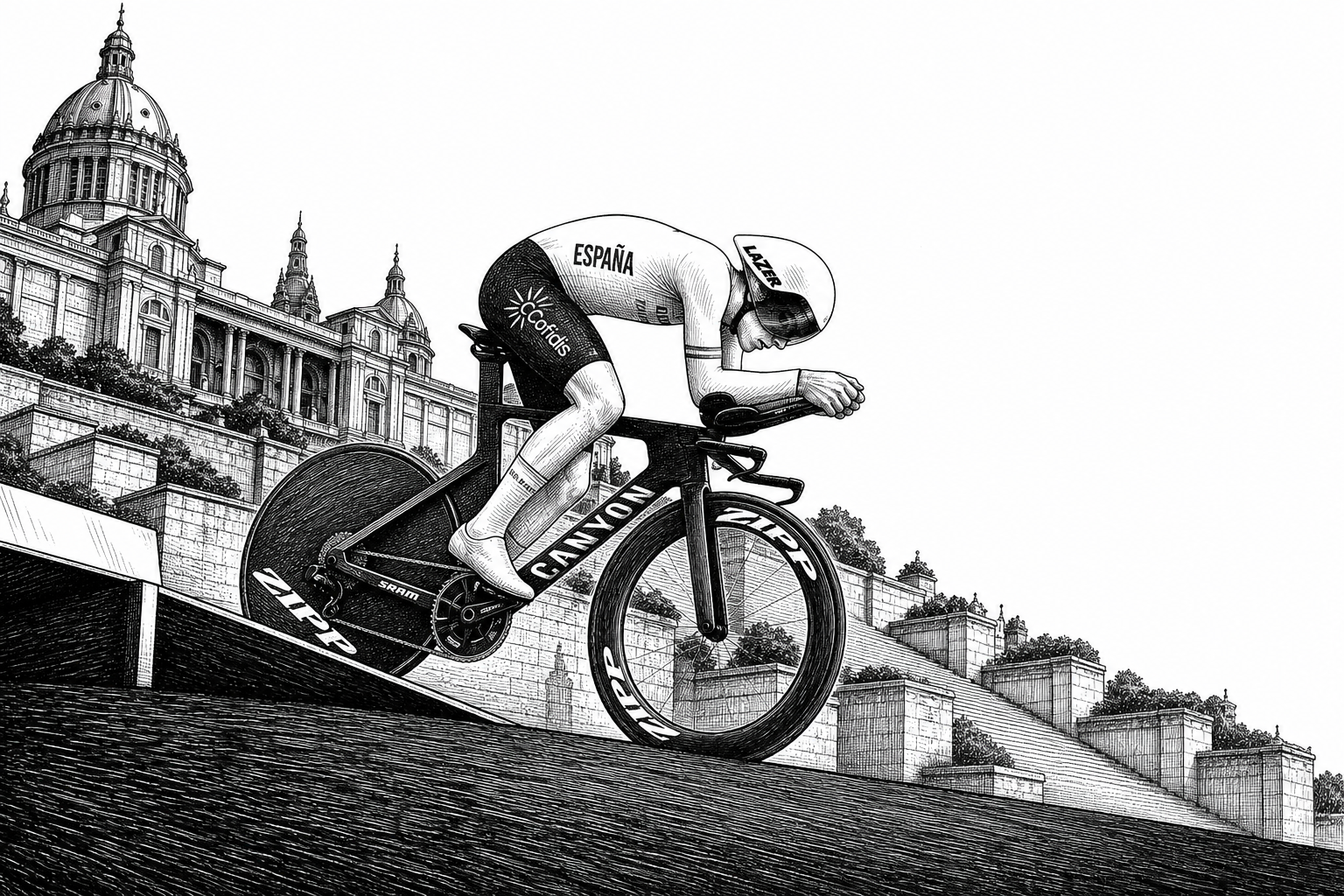
Lead illustration

A 19-year-old rider crouched over aero extensions on a time-trial bike, caught in the instant before the start-house ramp releases him. Shot from a low angle, side-on: the frame of the bike cuts a hard diagonal across the page. Behind him, the tiered stone facade of Montjuïc rises in pen-and-ink hatching, its terraced steps receding into deep shadow. The rider's visor is down, back flat, elbows in — everything compressed and still. The asphalt below is cross-hatched black; the sky above the building is open white. No crowd details, no finish, no outcome — only the boy on the machine and the city wall behind him, drawn in bold linework with generous empty space to either side.

The list is short. Since the Second World War, nine riders have won the Tour de France on their first attempt. Read it aloud and you're reciting a canon: Jean Robic, Fausto Coppi, Hugo Koblet, Jacques Anquetil, Felice Gimondi, Eddy Merckx, Bernard Hinault, Laurent Fignon. The ninth, Tadej Pogačar in 2020, was 21 years old and is now widely regarded as the greatest stage racer the sport has ever produced.1

Paul Seixas is 19. He rolls out in Barcelona today.

That's the frame Velo's feature sets up, and it's the right one — not because Seixas winning is likely, but because understanding exactly why it isn't tells you almost everything about what kind of rider he might become. The piece, published this morning on the Grand Départ, is worth your time before the team time trial goes.

The historical argument against Seixas is specific. Of those nine post-war debut winners, only two — Robic and Anquetil — arrived at the Tour without having first done the Giro d'Italia or the Vuelta a España.1 The other seven already understood what three weeks of racing does to a body: the metabolic attrition of week two, the way the cumulative fatigue changes your decision-making in week three. Seixas has never experienced any of it. His longest stage races have been the two editions of the Tour Auvergne Rhône-Alpes — eight days each — and the most recent one ended in a crash he's still managing around off the bike, even if he insists publicly that he's fine.1

The age gap with Pogačar is larger than it looks on paper. Pogačar was more than two full years older when he won in 2020, and he was already an extraordinary specimen. What makes Seixas's season compelling is that the comparisons feel at least partially earned: he finished second to Pogačar in Strade Bianche by one minute, was ahead of Isaac Del Toro and Florian Lipowitz in Itzulia Basque Country — where he also won three stages and the overall — and beat Remco Evenepoel in last year's Il Lombardia.1 The most revealing data point came at Liège-Bastogne-Liège in April: Seixas was the only rider who could follow Pogačar when the Slovenian accelerated on the Côte de la Redoute. They stayed together for another 21 kilometers, trading pace, until Pogačar finally opened a gap on the Côte de la Roche-aux-Faucons. Pogačar, by then, had started to worry it would come down to a sprint.1

That's a different kind of signal than a stage win. It says something about ceiling.


The scenario in which Seixas actually wins this Tour requires a fairly specific set of dominoes. Vingegaard would need to be paying a physiological price for his Giro preparation. Pogačar — who is widely said to handle extreme heat less well than Vingegaard, and who faces another building European heatwave — would need to crack somewhere in the mountains. That combination is possible. It is not probable. Even the piece's most optimistic framing ends with "there's a lot of what ifs."

What's more likely, and what the piece argues clearly, is that Seixas has a serious first Tour — takes some results, accumulates three-week experience nobody can teach, and files the whole thing away for a later assault. The French journalists who are whispering comparisons to Hinault are probably getting ahead of themselves. But they are not making things up, either. The season results are real. The Liège gap that almost wasn't is real.

Somewhere in the GC battle over the next three weeks, you'll want to know who this 19-year-old is and where he came from. This is a useful place to start.

Sources
  1. Could Seixas Actually Win His First Tour? Dream or Delusion? velo.outsideonline.com Jul 4, 2026

↑ Back to top

FROM THE ARCHIVE

Fifteen Bounces on Mars: July 4, 1997

On July 4, 1997, a spacecraft wrapped in airbags struck the Martian surface at 31 miles per hour and bounced. Fifteen times. Each bounce carried it fifty feet into the thin Martian air; the airbag system, inflated to nineteen feet across, absorbed the hits without tearing. Two and a half minutes after first contact, the craft rolled to a stop six-tenths of a mile from the point of initial impact, on the floor of Ares Vallis.1 No spacecraft had ever landed this way. It worked.

NASA chose the date deliberately. Mars Pathfinder was conceived as a technology demonstration — an argument that a lander and rover could reach another planet cheaply and quickly, without the decade-long timelines that defined Viking. The July 4 touchdown was part of the pitch: the kind of thing you announce at a press briefing with flags in the background.

The lander was named the Carl Sagan Memorial Station, after the astronomer who had died the previous year. The rover — a 23-pound machine standing one foot tall — was named Sojourner, after Sojourner Truth, the American abolitionist.1 Sojourner did not move on landing day. On the night of sol 2 — July 5, Martian time — it stood to its full height and rolled down the lander's rear ramp, tilted at twenty degrees from the surface, well within deployment limits, onto the ancient flood plain below.1

The site had been chosen because it was, in geological terms, a mess. Scientists believed Ares Vallis had been carved by a volume of water the size of the Great Lakes draining in roughly two weeks — a catastrophic flood early in Martian history that had deposited a chaotic scatter of rocks from different regions and different eras.1 One landing site, many geologies. Efficient.

By September 27, 1997, when the final data transmission arrived, Pathfinder had returned 2.3 billion bits of information: more than 16,500 images from the lander, 550 from the rover, and more than fifteen chemical analyses of rocks and soil.1 The rounded pebbles Sojourner photographed, the conglomerates in the rock record, the early-morning water-ice clouds in the lower atmosphere, the magnetic dust — all of it pointed the same direction. Mars had once been warm and wet.

Sources
  1. Mars Pathfinder Mission — NASA Science science.nasa.gov Dec 20, 2017

↑ Back to top

THE FUNNIES

Aero to a Fault / The Pathfinder Protocol

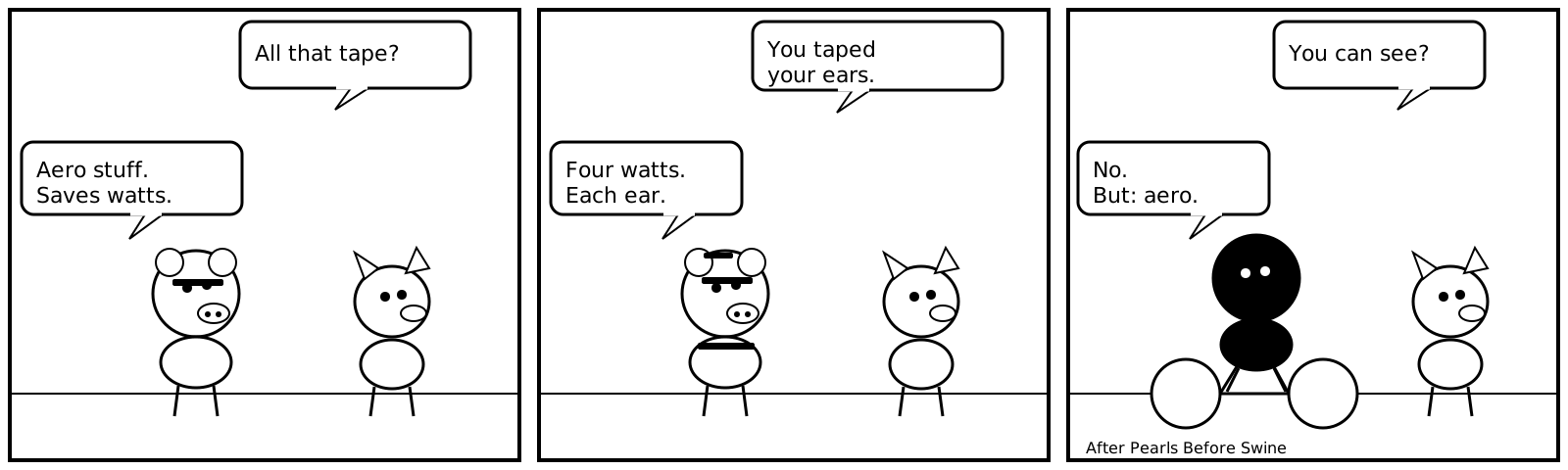
*After Pearls Before Swine — on the aero-tape arms race consuming the Tour de France garage, where taping every bolt head and body part promises one more watt saved, until the rider can no longer see the road. After Calvin and Hobbes — on July 4, 1997, when a spacecraft wrapped in airbags bounced fifteen times across the floor of Ares Vallis and made the whole thing look easy.*

Hand-drawn parody comic strip
AI-rendered parody comic strip

↑ Back to top

ALSO NOTED

Also Noted

↑ Back to top

THE QUESTION

Named but Not Stopped

When an institution documents a violation but has no enforcement that reaches the non-compliant actor, what does disclosure actually change?

Today's edition carries two stories that press this question from different corners. As THE PELOTON reports, FairSquare and three allied organizations sent UCI president Lappartient a formal letter — backed by UN expert reports, Amnesty International, Human Rights Watch, and US intelligence assessments — calling for the suspension of UAE Team Emirates-XRG's licence before the Grand Départ.1 The UCI has not responded. Neither team has spoken publicly. The race started on schedule. As THE LAB reports, Anthropic's fingerprinting mechanism surfaced Chinese AI companies accessing Claude in violation of its terms of service. Alibaba responded by banning Claude Code for its own engineers. ByteDance and Ant Financial kept going — via VPNs, cloud services, and Singapore subsidiaries — outside the effective reach of terms-of-service enforcement.2

The divergence is the interesting part. In the Anthropic case, disclosure produced voluntary withdrawal from one actor and circumvention from others. In the cycling case, it produced silence from everyone with formal authority and no behavioral change from either team named. What's common to both: the institution that holds formal power to act either won't or can't reach the actors still in violation. What differs: at least one company — the one with the most to lose reputationally from using a tool that was surveilling it — made a unilateral calculation and stopped.

The question worth carrying through the day is about mechanism: when enforcement can't reach the actor most willing to absorb the risk, does disclosure function as a deterrent, a record, or mainly as a signal to those who were already inclined to comply? FairSquare's letter named the problem in writing; Anthropic's code named the violators technically. In both cases, the naming is now public and permanent. Whether that's enough depends on who you think is actually reading it.

Sources
  1. Human Rights Groups Call on UCI to Suspend UAE Team Emirates-XRG Licence domestiquecycling.com Jun 30, 2026
  2. Claude Code's Complicated China Problem: Bans on Both Sides of the Pacific the-decoder.com Jul 3, 2026

↑ Back to top

Investigator Report

Investigator report — 2026/07/04

Verdict

A strong writing day. The paper had good material — Tour de France Grand Départ, Independence Day, Mars Pathfinder's 29th anniversary — and used most of it well. THE PELOTON, THE LONG READ, and FROM THE ARCHIVE all deliver clean, specific prose; THE QUESTION's cross-domain bridge between human-rights enforcement and terms-of-service enforcement is the edition's most interesting editorial idea. Two structural problems undercut the run: ON THE TRAIL delivered regional-snapshot bullets on a day that called for structured holiday-weekend backpacking picks, and the meta-writer overrode the triggers_meta: true config rule by assigning the lead image to THE LONG READ instead of FROM THE ARCHIVE. Pipeline ran with one costly comic-agent failure, an EF sponsorship story capped out of the thread tracker, and a false-positive blocklist addition that should be watched.


Frontpage

The rendered PNG is clean and newspaper-like. The lead image — a pen-and-ink cyclist on a TT start ramp with a building facade behind him — is well-composed and fills the THE LONG READ column effectively. THE PELOTON's 68px headline dominates the lead row as intended. No text is clipped or overrunning its box; the gradient fade-outs work correctly throughout.

One visual hierarchy mismatch is present in row 2: THE QUESTION's headline ("Named but Not Stopped") renders at 40px and occupies the full visual height of its column, while THE LAB's headline ("UE5.8 Adds an MCP Plugin; Alibaba Bans Claude Code for Its Own Engineers") renders at 26px in a narrower 310px column — despite THE LAB's higher priority (80 vs 73). The font-size difference was set by the art director in the HTML; it gives THE QUESTION more headline weight than THE LAB on the page. This is partly a consequence of the layout where THE LONG READ's image column anchors row 2 and leaves THE LAB with constrained space.

The long-form index.html (99KB, fetched live) shows sections in the expected tier order with no duplicate content, no missing sections, and clean citation links. The "duplicate paragraphs" the parser flagged are navigational ("↑ Back to top") and thread markers, not content errors.


Priority ranking

SectionPriorityLength (approx)ImageNotes
THE PELOTON90~850 wordsnoGrand Départ day; well-earned
THE LAB80~620 wordsnoThree stories; combined weight justifies 80
THE QUESTION73~370 wordsnoCross-domain bridge; earned
THE LONG READ68~680 wordsyes (lead)Single-source; lead image override (see below)
THE WORLD60~500 wordsnoStrong local day; headline matches body
FROM THE ARCHIVE38~430 wordsnoDate-perfect find; within priority cap
ALSO NOTED107 bulletsno
THE FUNNIES7description onlynoImage generated by OpenAI backend

The priority ordering is defensible overall. THE PELOTON at 90 is correct — the Tour Grand Départ is the biggest day in the cycling calendar and this paper's primary beat. THE LAB at 80 packages three independent, substantive stories. THE QUESTION at 73 is at the high end of "solid" (50–74) but the cross-domain bridge earns it. The art director respected the ordering for the lead row. The visual mismatch noted in the frontpage section (THE QUESTION's headline visually outweighs THE LAB's) is a layout execution issue, not a priority-assignment one.


Editorial reading

Finding 1 — ON THE TRAIL: Part 1 backpacking structure absent on a federal holiday long weekend.

July 4 is Independence Day, a federal Friday holiday. Per newspaper.yaml's ON THE TRAIL subsection rules, a Friday holiday triggers a long-weekend expansion: the trip window should be framed as Fri–Sun, with Thursday surfaced as opportunistic if conditions warrant. Part 1 must lead with 1–3 structured backpacking picks, each including trail/route name, region + drive time (from the authoritative table), trip length (1-night/2-night), per-day mileage and elevation gain, a weather quote pulled from the per-region NWS forecast in research.md, a one-sentence criteria clearance, and a WTA link.

What was delivered instead is three regional-snapshot bullets — the format of Part 2 — with no trip length, no mileage/elevation breakdown, no NWS weather quotes, and no criteria clearance check. The research.md had the weather data (Fri–Mon all sunny, 72–79°F across the corridor). The WTA trip reports were fetched (64KB, ok: true). Conditions were excellent: Esmeralda Basin and Glacier Basin both had recent favorable trip reports with no snow, no bug complaints, and good road access. A holiday weekend where the reader is off Fri–Sun and the forecast is clear across every region in the table is exactly the scenario the spec was designed for. The writer converted legitimate pick-candidate trails into snapshot bullets and omitted the Part 1 structure entirely.

Finding 2 — meta.json overrides triggers_meta: true; lead image assigned to THE LONG READ instead of FROM THE ARCHIVE.

FROM THE ARCHIVE's rules block in newspaper.yaml includes triggers_meta: true with the comment "meta-writer's lead image must match this section." Today FROM THE ARCHIVE shipped with substantive content (Mars Pathfinder, July 4, 1997). Despite this, meta.json shows lead_image_section: "THE LONG READ" and the prompt describes Paul Seixas on the Barcelona start ramp. The meta-writer agent's final summary confirms it consciously chose the Seixas/Montjuïc image because it was more visually compelling. The Seixas image is strong — and it works well on the page — but it contradicts a config directive that is not marked optional. From the archive's perspective: a pen-and-ink airbag-bounce landing on Mars would have been a striking and unusual image, and the date-coincidence with the Pathfinder story is exactly what the section is for. The meta-writer should have been prompted (or constrained) to respect the triggers_meta rule when FROM THE ARCHIVE ships non-empty.

Finding 3 — THE LONG READ uses one source cited five times; closer is weak.

THE LONG READ's five citations all point to the same URL (velo.outsideonline.com). This is structurally valid for a section that reviews one piece of longform, but it creates a citation list that is effectively a single source cross-referenced with five snippets. A second source — Seixas's ProCyclingStats page for the Itzulia result and Il Lombardia win, or a quote from the race itself — would have grounded some of the statistical claims independently and made the citations list function as intended. The piece reads well, but the single-source dependency means a reader who checks the citations sees one article five times.

The final sentence — "This is a useful place to start" — is the weakest line in an otherwise strong article. The preceding "The Liège gap that almost wasn't is real" is a much sharper close and would have served better as the final beat. The generic "useful place to start" framing is borderline LLM hedge prose and undercuts the directness of the rest of the piece.

Finding 4 — THE LAB trending footer omitted when it was required.

The LAB section has trending_dropped_note: true in its rules, meaning a one-line footer should appear on days the trending list is fully skipped. The researcher flagged trendshift.io as "[trending_dropped_note: all repos this session are LLM wrappers/agents; no deep fetch]" — a clear signal to the writer that the footer was due. The pages/lab/github-trending.md file exists (10,596 bytes) but the writer's final summary says it "was not fetched (file absent)" and omits the footer. This is incorrect: the file is present at the expected path. The footer should have appeared as a one-liner in THE LAB article. Minor, but the rule exists so the reader knows why trending repos didn't appear, and it was silently dropped.

Finding 5 — THE WORLD headline leads with local transit story; section body leads with world bullets.

The section headline "Kettle's Transit Cut Would Erase 1.1 Million Bus Hours; Housing Accelerator Stalls" signals the local transit/housing content, which the section config rightly prioritizes ("The reader cares more about local than world"). But the article body opens with the world bullets first (Independence Day, EU Parliament, US labor force) before pivoting to the local transit and housing coverage. A reader scanning from the top encounters the Independence Day item first, not the transit cut. The headline creates an expectation the structure doesn't immediately fulfill. The section's rule says frontpage_display: "headline_only", so the frontpage only shows the headline — which correctly telegraphs the most important local story. But in the full long-form index, the mis-ordering is noticeable.


Pipeline observations

Agent log findings:

The first comic-strip agent (agent-ac9c5561ad9a3175e, 544KB JSONL) failed with "API Error: Claude's response exceeded the 32000 output token maximum." This is the most material pipeline event. The orchestrator spawned a second comic agent (agent-a307a56ea0aa5fd44) which completed successfully, producing section-funnies.md and the OpenAI image. Total comic cost: $0.37 (failed run) + $0.54 (successful run) = $0.91 — more than THE PELOTON and THE LAB fact-checkers combined, and the most expensive single section in the run excluding the researcher and orchestrator. The failure is consistent with SVG generation being verbose; the 32k token cap is a hard system limit.

Thread tracker constraint:

The thread editor (agent-a4174891adedde2ce) logged that it could not open a thread for the EF Education-EasyPost title sponsor search (Vaughters's €30M/year deal, VIP guests at Tour stages) because the open count would reach 13, exceeding max_open: 12. No existing thread was eligible for dormant (all updated within 6 days). This is a config-enforced constraint, but the EF sponsor story is a genuine multi-stage arc that will resurface throughout the Tour. It will be untracked until a thread resolves or goes dormant.

Paywalled domains false-positive:

The fetch_retry_results.json begins with "[blocklist] added the-decoder.com." The-decoder.com was fetched successfully (2,112 bytes, ok: true) and used as THE LAB's citation 2 for the Alibaba/Claude Code story. The blocklist addition appears to be a false-positive from the scraper's paywall-detection logic during the retry pass. If paywalled_domains.txt now lists the-decoder.com, future editions will skip it as a source. The-decoder.com is independent tech journalism; the blocklist entry should be reviewed.

Fetch failures:

One unrecovered fetch failure: procyclingstats.com TdF Stage 1 results were blocked on all methods. This was correctly logged in the dropped array with the reason "Race starts 17:05 CEST — not yet run at research time." No editorial impact; the race had not started when the pipeline ran.

Race calendar (procyclingstats.com year-calendar) was served from the Jul 3 cache (ok: true, cached_from: 2026/07/03). The "On the Road Ahead" table carries a note: "Calendar from Jul 3, 2026 — primary source blocked today." This is handled correctly.

Agent completions: All non-comic agents end with substantive Done: summaries. No other mid-run stops or truncated outputs. No malformed frontmatter. All expected agents present: dedup (inferred from covered.json), scout, researcher, one writer per non-empty section, one fact-checker per writer, meta-writer, illustrator, art director, thread editor. Section files all have required fields (headline, priority, sources). The funnies section-funnies.md body is intentionally descriptive text (the OpenAI backend generated the actual image separately as funnies-openai.png).

Starting commit: Run started from commit 11e3b6a ("Add .env to .gitignore", Jul 3 15:56 UTC), a non-pipeline change. Same-day adjacent; no pipeline-critical commits were missed.

Pipeline alerts: log-pipeline-alerts.md not present. No alerts to report.


Trace highlights

1. Researcher owns the dollar, not the wall clock. The researcher ran for 2,056s and cost $2.28 with 4.5M cache-read tokens — the single largest agent expenditure. On Grand Départ day with parallel cycling, tech, local, and archive stories, this is expected. What's notable is that the writer agents spent $0.08–$0.50 each. The researcher brief was expensive but the writers consumed it efficiently.

2. FC: THE WORLD ran 2–5x longer than other fact-checkers (758s, $0.59 vs a $0.11–$0.20 range for the rest). Its 891 input tokens and 286 output tokens suggest it worked through multiple WTA trip reports, transit data sources, the Stillaguamish citation, and world-news citations. The WORLD section has the most heterogeneous source set of any section; the extended verification time is plausible.

3. Two comic runs cost as much as three section writers combined. The failed first comic at $0.37 and the successful retry at $0.54 total $0.91. THE PELOTON ($0.19), THE LAB ($0.13), and FROM THE ARCHIVE ($0.10) together cost $0.42. The output token cap on SVG generation is a known structural risk — the first attempt likely generated a partial SVG that exceeded 32k tokens before completing. If the comic agent routinely hits this ceiling on high-detail descriptions, a simpler generation strategy (fewer panels, less detailed SVG) would reduce retry frequency.

4. Art Director at 1,106s is the longest single-agent wall time after the researcher and the failed comic. At $0.54 it cost as much as the successful comic run. The frontpage HTML it produced is correct and clean, but the time investment for a layout agent is high. This may reflect multiple layout passes or extensive context reading from sibling sections.

Trace summary

Dispatch 2026-07-04 (model: claude-sonnet-4-6)

AgentDurInputOutputCache ReadCache 5mCache 1hCost
Scout477s7906642464501100220$ 0.51
Researcher2056s61207945344852359520$ 2.28
THE WORLD541s8712838221097770$ 0.50
THE PELOTON298s63771807457570$ 0.19
THE LAB299s63355467313150$ 0.13
THE LONG READ126s63850203175850$ 0.08
FROM THE ARCHIVE108s65261245225180$ 0.10
Meta-Writer107s997124570271560$ 0.14
FC: FROM THE ARCHIVE137s77786917321540$ 0.15
FC: THE LONG READ209s750103349314960$ 0.15
Illustrator49s2151372000$ 0.06
FC: THE PELOTON441s884141370830110$ 0.35
FC: THE LAB337s9103179494390940$ 0.20
FC: THE WORLD758s891286694910990490$ 0.59
THE QUESTION219s872140410347850$ 0.17
FC: THE QUESTION144s63164923249840$ 0.11
ALSO NOTED308s11328262450611480$ 0.31
Draw today's TWO parody comic strips for2027s146331407946880$ 0.37
FC: ALSO NOTED274s81193183119403100$ 0.21
Draw today's TWO parody comic strips for1003s162224248991098340$ 0.54
Funnies (OpenAI)128s4305488000$ 0.22
Art Director1106s132392887221211220$ 0.54
Update story threads for today's edition548s5107219953340$ 0.36
Orchestrator1672645970859470111243$ 3.19
TOTAL1062637448151231851467091111243$11.47

Suggestions for next edition

1. ON THE TRAIL on holiday weekends needs a preflight check. The WORLD writer should be prompted to confirm it has delivered Part 1 structured backpacking picks (with mileage, NWS quotes, criteria check) and not just regional snapshot bullets. A one-line self-audit — "Did I include trip length and per-day mileage for each pick?" — in the writer prompt would catch this. July 4 was a perfect backpacking weekend and the section left that value on the table.

2. triggers_meta: true needs a hard constraint in the meta-writer prompt. The meta-writer should be told explicitly: if FROM THE ARCHIVE shipped non-empty, the lead image must draw from that section's subject, not from any other section regardless of news weight. The rule exists to connect the image to the archive find; today's override produced a better image but violated the design intent. If the rule is wrong, change it in newspaper.yaml; don't let the meta-writer quietly override it.

3. The-decoder.com blocklist entry should be reviewed. The paywalled_domains.txt likely now includes the-decoder.com after the retry fetch added it. The-decoder.com produced 2,112 bytes of clean content today and is a legitimate independent tech news outlet. If it stays on the blocklist, future editions lose an independent source for Anthropic/AI industry stories where independent coverage is already thin.

4. Consider capping the comic agent's SVG output scope to reduce 32k token overflow risk. Two comic concepts (Pearls Before Swine + Calvin and Hobbes) in a single generation pass is more likely to hit the ceiling than one. If the agent consistently needs two attempts on multi-concept days, running two single-concept passes sequentially — or constraining the SVG to fewer panels with simpler line counts — would eliminate the $0.37 retry cost.